
Last updated November 17, 2026
 Home additions & ADU
 Kitchen remodeling
 Bathroom remodeling
 Roofing
 Windows & doors
 Driveway & pavers
 Fence
Free written scope consultation - allowances, timeline, and change-order rules on paper before a single trade is scheduled
Construction Warning Signs: A Richmond Homeowner’s Reference Guide
Most warning sign guides are about failures you can already see: a crack wide enough to slip a coin into, water running down a wall, wood that crumbles when you press it. Those are the loud ones. By the time they show up, the repair has usually stopped being cheap. In our experience across Richmond, the costly projects almost always started with a quiet signal the homeowner noticed, filed away as minor, and planned to keep an eye on. This guide is about those quiet signals. You’ll learn what Richmond’s clay soil does to a foundation, how to read water inside a wall before it reaches the drywall, and which flatwork defects mean a driveway is heading for replacement. Call (877) 367-8617 for a free estimate.
Quick Answer
The early warning signs that matter most in Richmond are subtle: hairline cracks that widen slowly, paint that bubbles in a pattern rather than a single spot, white mineral deposits on masonry, ceiling stains with a defined outline, doors that start to bind, and driveway joints that widen over months. Each one points to water or movement happening behind the surface, and the window to fix it cheaply usually lasts 12 to 36 months from when the sign first appears.
Styles & brands we work with
- Kitchen remodeling
- Bathroom remodeling
- Home additions & ADU
- Roofing
- Windows & doors
- Driveway & pavers
- Fence
Table of Contents
- Why Richmond Soil Makes Movement Signatures Read Differently
- What Hairline Cracks Actually Indicate
- Exterior Signs: Paint, Efflorescence, and Where Water Travels
- Interior Signals That Start Outside
- Driveway and Flatwork Warning Signs
- Roofline and Window Signals
- The Photo Log Habit
- When to Call a Professional
Why Richmond Soil Makes Movement Signatures Read Differently
Richmond sits on expansive clay. That matters because clay does something concrete doesn’t forgive: it swells when it takes on water and shrinks as it dries, and the change happens unevenly across a lot. One side of a house may sit on soil that drains quickly while the uphill side holds moisture longer. The result is a foundation that moves by fractions of an inch in different directions at different times of year, and a house that shows the strain in specific ways.
The soil behavior shapes what a warning sign looks like here. A crack that runs diagonally from a window corner near an outside wall reads differently than the same crack in the middle of a slab. Vertical cracks in a foundation wall are often shrinkage-related and stable. Diagonal cracks that step through a masonry joint suggest one part of the foundation is settling relative to the rest. The direction and the pattern matter far more than the width.
Two things drive the pattern on any given Richmond lot. The first is drainage: where water pools and where it runs off. The second is vegetation. A mature tree close enough to a foundation can pull moisture from the soil and worsen the shrink-swell cycle on that side of the house. Neither of these shows up as a dramatic symptom. Both show up as small, progressive movement you can measure if you’re paying attention.
The practical takeaway: don’t assess a crack by how it looks today. Assess it by whether it’s changing. That’s a matter of record-keeping, and we’ll get to a simple method for that further down.
What Hairline Cracks Actually Indicate
Hairline cracks in a Richmond home are common and most are cosmetic. The problem is that “most” isn’t “all,” and the difference between a cosmetic crack and an early structural signal isn’t obvious to look at. Two simple tests separate them without any special tools.
Test 1: The Monitoring Test
Pick the worst crack on the property and mark both ends with a pencil line directly on the wall or slab, noting the date. Take a photo of the marking with something for scale in frame, like a coin. Repeat the photo from the same angle every 60 to 90 days. If the crack is not growing past the pencil marks after a full wet season and a full dry season, it’s very likely cosmetic. If it’s extending beyond the marks, it’s an active movement signature.
Test 2: The Pattern Test
Look at where the crack starts and stops. Cosmetic shrinkage cracks tend to be short, vertical, and isolated. Structural movement signatures tend to:
- Run diagonally from the corner of a window or door opening
- Step through masonry joints rather than cutting straight across a block
- Appear on both the interior and exterior face of the same wall
- Come with a door or window in the same wall that no longer closes cleanly
If a crack fails both tests, it’s worth a professional assessment before further work on that wall. Neither test requires any skill, and both take a few minutes every quarter.
Cracks That Don’t Need Worry
Not every line in a wall is a warning sign. Cracks in drywall at the seam between two sheets, cracks following the line where an addition meets the original house, and hairline cracks in stucco or plaster that don’t change over time are all common and generally benign. The signal is the change, not the presence.
Exterior Signs: Paint, Efflorescence, and Where Water Travels
Exterior surfaces on a Richmond home tell you where water is moving behind them. The trick is understanding what each pattern means, because the surface defect is rarely where the water is coming from.
Paint Bubbling Patterns
Paint that bubbles in a single spot, especially near the bottom of a wall or under a window, usually means moisture is trapped behind it. Paint that blisters in a broad band or rises in a vertical stripe up a wall usually means water is entering higher up and traveling down behind the paint film. The lower bubbling is not the source. Look above and trace the path.
Efflorescence and Where It Points
Efflorescence is the white, powdery mineral deposit that appears on concrete, brick, or stucco. It’s a sign of moisture passing through masonry and evaporating at the surface, and it’s one of the most useful exterior signals on a Richmond property. The location of the efflorescence tells you where the water is finding its way in. Bloom on a foundation wall near a downspout points at drainage. Bloom at the base of a chimney suggests flashing or masonry moisture behind. Bloom on an interior block wall in a garage is one of the earliest looks you’ll ever get at what’s happening in the soil around the foundation.
What to Check Every Season
- Look at the base of every exterior wall for efflorescence
- Check paint at window and door frames for bubbling or peeling in a pattern
- Run water from a hose at each downspout and confirm where it travels
- Check that soil slopes away from the foundation, not toward it
- Inspect the exterior of your home additions & ADU junction, if you have one, for a step in the paint or stucco surface
When we’re called in to look at an exterior defect, that’s where we start: surface pattern first, path of travel second, source third. The repair is almost never on the surface where the defect is visible.
Interior Signals That Start Outside
Most of the interior warning signs homeowners report in Richmond originate outside the room they’re in. That’s the part people get wrong. A ceiling stain isn’t a ceiling problem. A baseboard warp isn’t a baseboard problem. Each is the last stop on a path that started somewhere on the exterior envelope.
Reading Ceiling Stain Shapes
A stain with a soft, diffuse edge usually indicates an active or recent leak. The water inside the drywall is still spreading. A stain with a defined, dark ring around a lighter center usually indicates a leak that has stopped, dried, and left a mineral tide line at its edge. Both are worth investigating, but the first one is more urgent.
Position the stain on the ceiling and look straight up to the roof plane. Any point in the stain that lines up with a roof penetration, a valley, or a wall junction is a likely entry point. If the stain is on the sloped ceiling of a top-floor room, the entry is almost always upslope from the stain, not above it.
Baseboard Warping and What It Says
Baseboard warping patterns are one of the most under-read signs on a Richmond home. A single baseboard that’s pulled slightly away from the wall at its ends usually means the wall’s drywall is wet and swelling at its base, which means water is arriving low on the wall from outside. A baseboard that’s rippled along its length, or has lifted from the floor, usually means the moisture is coming up through the floor or in from a door or window. Where the warp stops tells you where the water starts.
Binding Doors and Windows
A door or window that suddenly binds, sticks at the top or bottom, or no longer latches cleanly in a Richmond home is one of the most reliable early indicators of frame shift. If only one opening in the house binds, the cause is likely that opening. If several openings in the same wall bind at once, the cause is usually behind the wall. Mark the strike plate with a pencil and check it in 90 days. If the door has moved further, the wall behind it is moving.
Reading the Pattern, Not the Symptom
When you call for an assessment, describe the pattern: which wall, which openings, what changed and when. That speeds up the diagnosis more than any single photo can. It also lets us look at the exterior of the affected walls first, which is where the cause almost always lives.
Driveway and Flatwork Warning Signs
Driveways and flatwork give you a longer warning than most homeowners realize. The signs that precede full replacement usually appear 12 to 24 months before a driveway crosses the point where repair no longer makes sense. Catching them early is often the difference between patching and replacing.
Edge Spalling
Spalling is the flaking or pitting of the concrete surface. It often starts at the edges of a slab, near the joints and at the lip where the driveway meets the street. Edge spalling is worth watching because it tells you the slab has absorbed water and the surface layer has begun to fail. A single spalled patch can be repaired. Spalling that runs along most of an edge suggests the whole slab is vulnerable.
Joint Widening
Expansion and control joints in concrete are supposed to be a specific width, usually about a quarter inch. If a joint in your driveway looks noticeably wider than the others, or if it’s widened over the course of a full wet-dry cycle, the slab has shifted. A single widened joint is usually local. Widened joints across multiple adjacent slabs points to a base problem beneath.
Surface Pop-Outs
Pop-outs are the pits left when a small piece of aggregate or debris pushes out of the surface. A few scattered pop-outs are cosmetic. A pattern of pop-outs concentrated in one area, especially in low spots where water pools, points to moisture in the slab itself and a surface that’s already losing cohesion. The pattern matters more than the count.
What to Do About It
If a driveway is showing two or more of these signs, it’s worth getting an assessment before the next wet season. If a driveway is showing one sign, monitor it and record the pattern. When the driveway reaches replacement, that’s the moment to plan materials once instead of twice, and to consider upgraded hardscape options from a supplier bench like Belgard, Unilock, or Techo-Bloc. You can see how that scope is usually handled on our driveway & pavers page.
Roofline and Window Signals
The roofline and the window envelope show wear in ways that are easy to miss from the ground but obvious once you know what to look for. The single best vantage point on a Richmond house is the far end of the property, at a slight angle to the roof, ideally with a pair of binoculars.
Roof Warning Signs to Watch
- Shingles that lift at the edges after wind or heavy rain
- Granules accumulating in gutters or at the base of downspouts
- Dark streaks or staining on the north-facing roof planes
- Visible sag along a roof line, however slight
- Flashing that shows a visible gap where it should lap over the roof surface
Any single roof warning sign is worth a look. Any two of them together points to a roof that’s nearing the point of a repair-versus-replace decision, and roof replacement is an easier choice when the roof is planning for it rather than reacting. Roofing material options from GAF, CertainTeed, Owens Corning, and similar manufacturers all come in tiers with different warranty terms, so the conversation is usually about matching the tier to the timeline, not picking a single product.
Window and Door Warning Signs
Windows and doors show their age on the exterior frame, not the interior trim. Watch for paint that’s failing at the bottom of the frame, sealant that’s pulled away from the siding, and glass that fogs between the panes. A window that no longer seals at the bottom corner is letting water into the wall behind the frame, and that’s where damage starts.
A licensed installer should assess exterior window and door failures, especially on a second story. On modern window replacements, impact-rated glass lines are available that hold up better in heavier weather and cost less to cool against. That’s a conversation worth having when windows reach replacement, but it’s an assessment a trained eye should make, not a homeowner’s guess.
Safety Note
Roof and upper-level window assessments are not homeowner work. Walking a roof, removing shingles, or working at height to reseal a window frame is one of the highest-injury categories in residential construction. Get the assessment from a professional, including a look at the flashing, and let that inform your plan.
The Photo Log Habit
Documentation is the single most useful habit a Richmond homeowner can build into routine maintenance, and it costs nothing but a few minutes every quarter. It’s the difference between “I think that crack is new” and “that crack extended 2 inches since October.” When a contractor or an insurer is looking at a problem, a photo log answers the questions they need to answer in minutes instead of a full exploration.
The Method
- Pick a fixed date each quarter, say the first Sunday of January, April, July, and October
- Walk the exterior of the house clockwise, taking one photo at each corner and each roof line
- Photograph every crack, stain, efllorescence patch, and popped paint spot with something for scale (a coin or a tape measure against the wall)
- Photograph the interior of the same walls the exterior photos covered
- Store the photos in a single folder named by date, and back them up off the phone
- Write one line about anything that changed since the last set
Why It Matters to a Contractor
When we assess a property, the first question we ask is usually “when did you first notice it, and has it changed?” A photo log answers that question with evidence instead of memory. It also makes the assessment faster, because we can see how the pattern has developed rather than assessing a single snapshot. For insurance claims, a dated progression is often the most useful document in the file.
Common Mistakes to Avoid
- Judging a crack by its width, not its trend. A stable half-inch crack is less urgent than a quarter-inch crack that’s grown every season. Mark the ends and photo the marking.
- Treating the visible symptom as the problem. Painting over bubbling or patching a ceiling stain without finding the water source guarantees a repeat in the next wet season. The defect is at the end of the path, not the beginning.
- Skipping the wet-season inspection. Richmond homes show the most evidence during and just after heavy rain. That’s the time to walk the property, not the driest month of summer.
- Assuming one trade covers the whole envelope. A water intrusion problem rarely stops at one material. When roof, siding, windows, and drainage are coordinated by one contractor, the diagnosis is faster and the repair doesn’t stop at a boundary.
- Letting a driveway past the repair window. Edge spalling and widening joints are generally manageable for a couple of seasons, then not. Waiting for full failure means replacing instead of patching.
- Choosing materials after the diagnosis. If the failure points to replacement, choose materials against the actual conditions. Picking a roofing tier, siding, or window line before the diagnosis is finished usually means re-deciding mid-project.
- Not photographing before the assessment. The photos you take before a contractor arrives are the record you’ll want if the repair turns into an insurance conversation.
See the difference
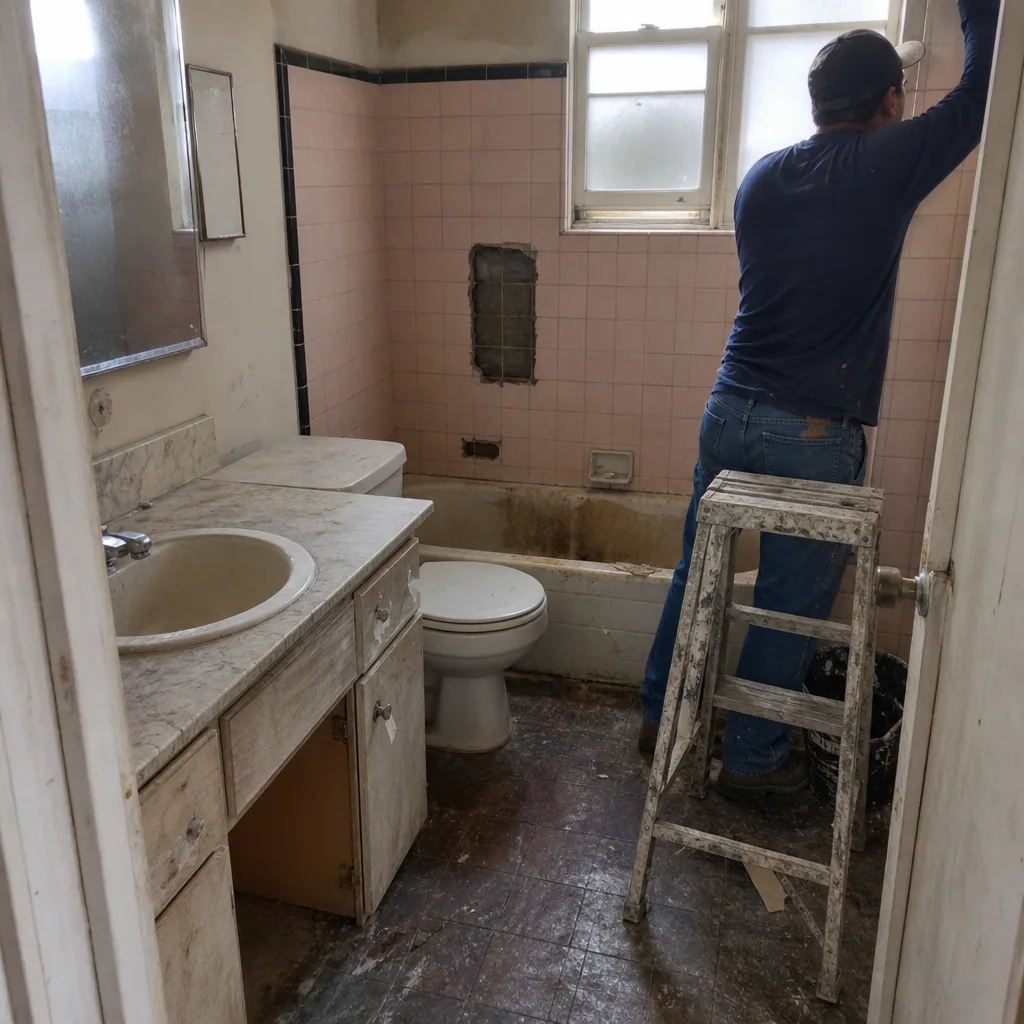 Before
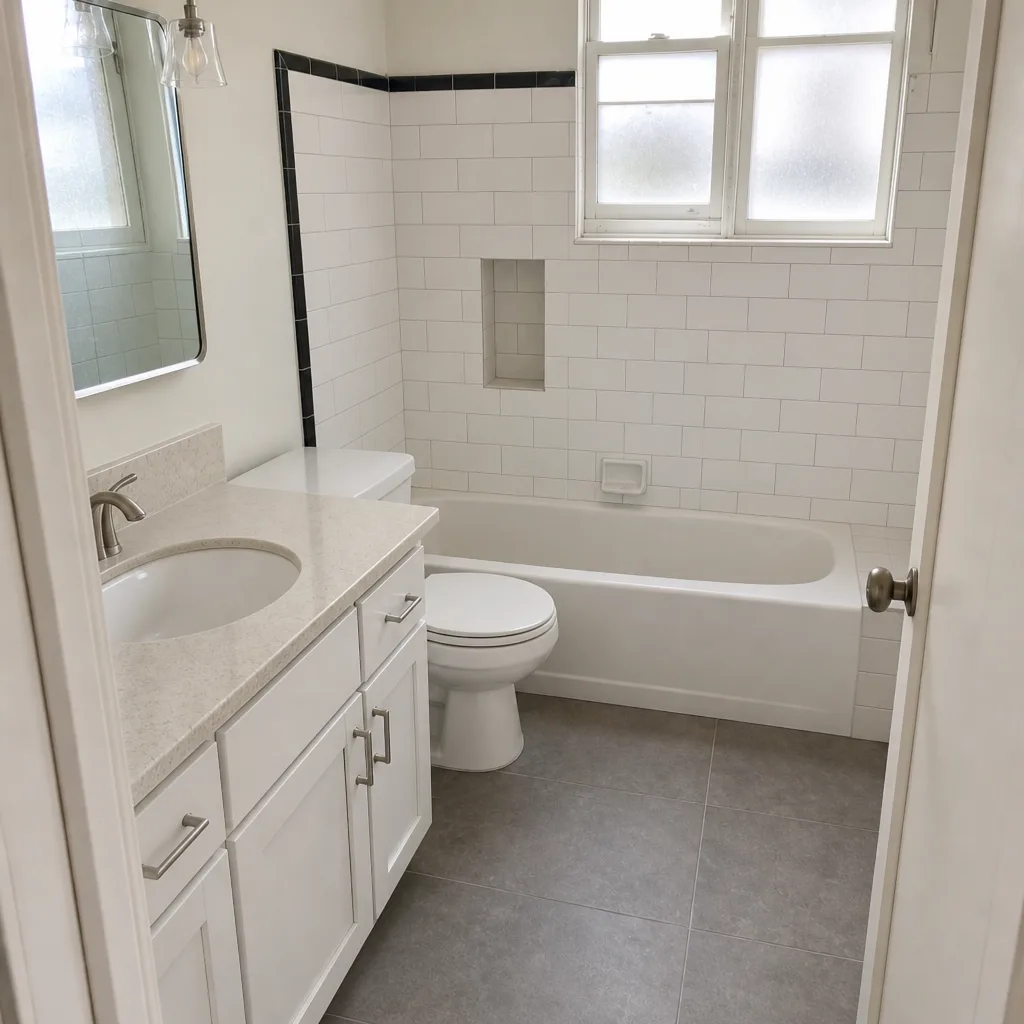 After
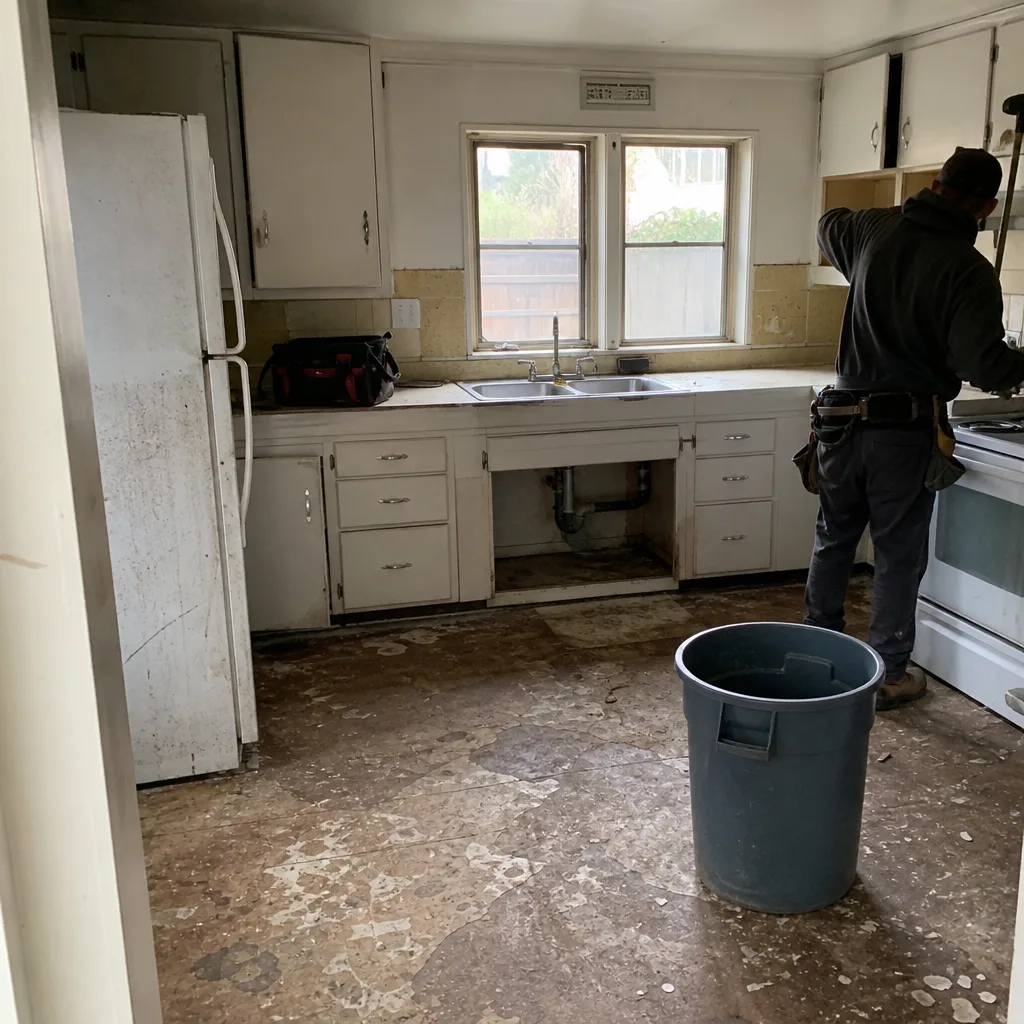 Before
 After
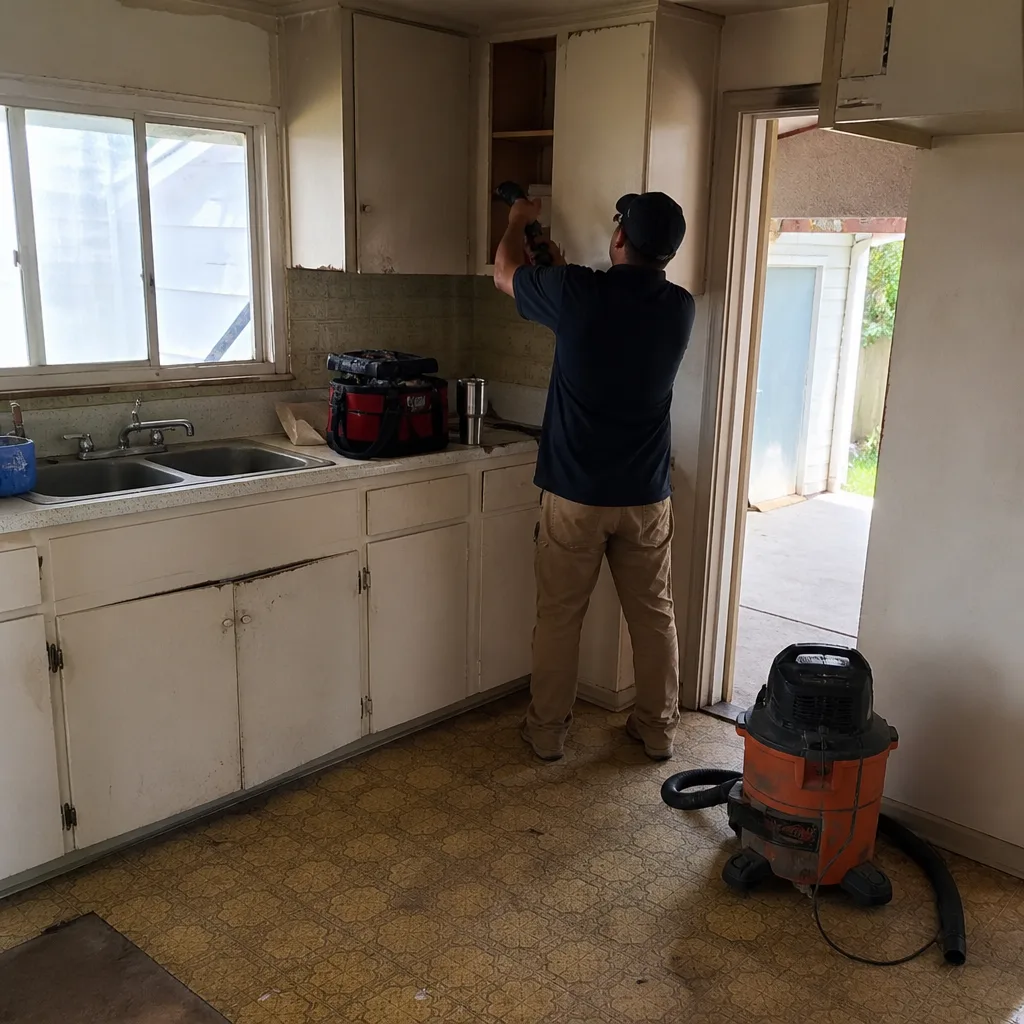 Before
 After
When to Call a Professional
Some warning signs are a watch-and-record situation and some are a call-it-now situation. Call for an assessment if a crack has grown past your pencil marks, if a ceiling stain appears with a soft edge, if two or more openings in the same wall bind at once, if you find efflorescence on an interior wall, or if a roof shows two or more of the signs listed above. Those are the cases where the 12-to-36-month window is genuinely open and a cheap repair is still available. Construction Richmond offers free estimates in Richmond, so call (877) 367-8617 to schedule one. We answer 24/7. Fast dispatch from 7am to 7pm, Sunday through Friday.
Frequently Asked Questions
Mark the ends of the crack with a pencil and photo it with a coin for scale, then repeat from the same angle every 60 to 90 days. If the crack has not grown past the marks after a full wet and dry season, it’s very likely cosmetic. If it’s extending, or if it steps diagonally through a masonry joint and a nearby door or window no longer closes cleanly, it’s an active movement signature worth an assessment. Call (877) 367-8617 for a free estimate.
Efflorescence on a foundation wall means moisture is passing through the masonry and evaporating at the surface, leaving white mineral deposits behind. The location is the useful part: bloom near a downspout points to drainage, and bloom at the base of a chimney points to flashing or behind-wall moisture. It’s not dangerous by itself, but it’s one of the earliest signals that water is finding its way in. An assessment is worth scheduling before the next wet season.
Edge spalling means the concrete has absorbed water and the surface layer is beginning to fail where moisture collects. It’s most common at the lip where the driveway meets the street and at joints. A single spalled patch can be repaired. Spalling that runs along most of an edge or sits directly at a widened joint is usually a sign the whole slab is nearing replacement. If the driveway is headed that way, it’s better to plan the replacement material once than patch twice. Call (877) 367-8617 to talk through options.
Not necessarily. One stuck door in a Richmond home is usually that door. Two or more doors and windows in the same wall binding at once points to frame shift and a wall that’s moving. Mark the strike plate of the worst one and check it after 90 days. If it’s moved further, the wall behind it needs a professional look.
In our experience, the early warning signs on a Richmond home generally run 12 to 36 months before a major failure. That window is why a photo log and quarterly inspection matter: it lets the repair stay in the affordable range instead of the full-replacement range. If you’re not sure where a sign sits on that timeline, an assessment is faster than waiting to see what happens next.
Photograph every crack, stain, efflorescence patch, and popped paint spot with something for scale, plus the exterior of every wall the interior photos cover. Include the roofline from the far end of the property. Date the folder. That record makes the assessment faster and is often the single most useful document if the repair becomes an insurance conversation. Call (877) 367-8617 to schedule a free estimate and bring the photos.
The Bottom Line
The early warning signs on a Richmond home are usually small: a widening joint, a paint bubble with a pattern, a white patch of efflorescence near a downspout, a door that binds at the top. Each one is the visible end of a path that starts behind the surface. The window between “notice” and “major failure” is generally 12 to 36 months, and the repair stays affordable only when the assessment happens inside that window. Mark it, photo it, record the date, and call when it’s changed. When the assessment points to replacement, that’s where picking the right material from the start saves the most.
We connect Richmond homeowners with independent local professionals who assess, plan, and build. From the driveway to the roofline, that includes exterior hardscape, windows and doors, roofing, and interior work. If you’re planning more than one project, our team can look at the whole envelope at once instead of one trade at a time. Our technicians have up to 11 years of experience, and our work is licensed and insured. Call (877) 367-8617 for a free estimate. We answer 24/7. Fast dispatch from 7am to 7pm, Sunday through Friday. See what a single-source contractor can do for your home at Construction Richmond, and when a perimeter project is part of the plan, our fence installation team handles material choices from nationally recognized brands so the whole property comes together in one scope.
Written by the team at Construction Richmond.