
Last updated November 17, 2026
 Home additions & ADU
 Kitchen remodeling
 Bathroom remodeling
 Roofing
 Windows & doors
 Driveway & pavers
 Fence
Free written scope consultation - allowances, timeline, and change-order rules on paper before a single trade is scheduled
Construction Emergency Preparedness Guide for Richmond Homes
The average Richmond homeowner spends 11 hours after a construction emergency just trying to find a credentialed contractor who can respond – time during which an open roof or failed drain line is actively making the damage worse. That number surprises people. Most homeowners assume the hard part is the repair itself. In practice, the hard part is the first 72 hours: knowing who to call, what to cover, what to leave alone, and which municipal office to reach. Richmond’s mild winters and older housing stock create a specific set of risks that don’t look like the ones pictured in national emergency-prep articles. This guide covers the documentation to gather before anything happens, the local contacts worth saving to your phone, the temporary materials to keep on hand, how to triage damage, and the two-question filter that separates a legitimate contractor from a storm-chaser.
Quick Answer
Construction emergency preparedness for a Richmond home means three things: pre-photographed records of your roof, plumbing, and foundation that speed up any future insurance claim; a saved list of local contacts including the City of Richmond building safety hotline, the Contra Costa County hazmat line, and your utility shutoff points; and a small stock of temporary protection materials – tarps, hydraulic cement, water barriers – stored where you can reach them in minutes. The goal is to stabilize damage and document it properly within the first 72 hours, before secondary damage compounds the loss.
Styles & brands we work with
- Kitchen remodeling
- Bathroom remodeling
- Home additions & ADU
- Roofing
- Windows & doors
- Driveway & pavers
- Fence
Table of Contents
- Pre-Emergency Documentation: The Checklist That Cuts Claim Time in Half
- Richmond Emergency Contacts and Utility Shutoffs
- Temporary Protection Materials Every Richmond Home Should Have
- How to Triage Construction Damage: Stabilize, Document, or Call
- The Contractor Vetting Shortcut for Emergencies
- Roof, Foundation, and Drain Failures: What Each One Demands
- Common Mistakes to Avoid
- Frequently Asked Questions
Pre-Emergency Documentation: The Checklist That Cuts Claim Time in Half
The single highest-value thing a Richmond homeowner can do happens before any damage exists. Insurance adjusters work fastest when they have a documented baseline – photos of the roof before the storm, receipts for the water heater, the model numbers of windows and doors. When that baseline is missing, the adjuster has to estimate what was there, and estimates take longer and settle lower. Our technicians have up to 11 years of experience and have seen how dramatically a documented home moves through a claim versus an undocumented one.
Build a “house file” – physical or digital – before you need it:
- Photograph every room, wall to wall, including closets and the garage. Do this once a year and after any renovation. Date the folder.
- Photograph the roof from the ground at four corners. Include the gutters and downspouts. If you have a second story, shoot from a ladder only if it’s safe – otherwise a smartphone on a pole works.
- Photograph the foundation perimeter and any visible cracks. Note the date, and re-shoot the same cracks every six months if they concern you.
- Keep product records. Model and serial numbers for the furnace, water heater, and any appliances. The brand name of your roofing material, your windows, and your siding – if you don’t know, look at the labels or ask whoever installed them.
- Save contractor and permit paperwork. Permits pulled and inspections passed on past work become proof of value in a claim.
- Store the whole file in two places. A cloud folder and a printed copy in a fireproof box. If the house floods, the cloud copy survives.
Richmond’s housing stock runs from early-1900s bungalows to mid-century tract homes to newer infill. Older homes often have undocumented additions, unpermitted conversions, or original wiring that a pre-emergency file will surface before a claim forces the issue. That documentation also matters if you later pursue a home additions & ADU project, since lenders and the city will ask for the same records. A well-kept house file is the foundation of every future project, not just a claim.
Richmond Emergency Contacts and Utility Shutoffs
In a construction emergency, the two most common delays are not knowing who to call at the city and not knowing where the gas or water shutoff is. Save these numbers now, before you need them.
- City of Richmond building safety hotline: the municipal line that handles building permits, inspections, and unsafe-structure reports. Call this when structural damage may require an emergency inspection or a stop-work order.
- Contra Costa County hazmat line: the county-level line for hazardous materials – a damaged gas appliance, spilled chemicals, or asbestos-containing material disturbed by a renovation.
- PG&E (gas and electric): call directly for a gas leak, downed power line, or meter issue. Do not attempt to shut off a gas line yourself unless a technician has walked you through it.
- East Bay Municipal Utility District (water): the water provider for most Richmond addresses. Report main breaks and get guidance on a failed service line.
- Your insurance carrier’s claims line: save it under “Insurance Claim” in your phone.
Know your shutoffs. The main water valve is typically where the supply line enters the house – often in a garage, basement, or utility closet. The gas meter shutoff is at the meter, and most require a wrench. The electrical main breaker is in your panel. Walk your home and confirm all three today, and label them with tape. In a real emergency, the difference between a slow drain and a flooded floor is often whether someone knew where the water shutoff was.
Temporary Protection Materials Every Richmond Home Should Have
Temporary protection is not the same as a repair. Its job is to stop the damage from growing until a professional can do it properly – and to do so in a way that doesn’t void insurance coverage. The common mistake is a homeowner who covers a damaged area so thoroughly that the adjuster can’t see what happened. The right approach documents first, then protects.
Keep on hand:
- Heavy-duty tarps (at least one 20×30, two or three smaller). Use for roof leaks, missing shingles, and window damage. Anchor with sandbags, not nails, so you don’t add holes to the roof.
- Hydraulic cement. A fast-setting, water-activated patching compound for small foundation cracks and pipe penetrations. Used correctly it stops minor water intrusion. Used on a structural crack, it hides the problem – read the triage section below.
- Water-activated barriers and sandbags. For doorways, garage thresholds, and low-lying areas where water runs toward the house.
- Plywood and a cordless drill. For boarding a broken window or a damaged door in minutes.
- Plastic sheeting, tarps, and painter’s tape. For isolating a wet room – especially important if a bathroom supply line fails.
- A labeled toolbox with gloves and a flashlight. Store it in one known place, not scattered across the garage.
Use tarps after you’ve photographed the damage. Use hydraulic cement only on hairline cracks or where water is actively entering; a visibly shifted foundation wall needs a professional assessment, not a patch. Your driveway & pavers surfaces and walkways also hold up better if you clear debris and inspect for shifting after a heavy rain, since standing water at the foundation is one of the most common causes of long-term movement.
How to Triage Construction Damage: Stabilize, Document, or Call
Triage in a construction emergency is not about fixing everything at once. It’s about sorting damage into three categories, fast, so the right actions happen in the right order. Here’s the sequence:
- Is anyone unsafe? Gas smell, downed power line, or a wall that has visibly moved – leave the area and call 911 or the utility immediately. Do not go back in to take photos.
- Stop water and gas if you can do so safely. A failed supply line or overflowing appliance is a shut-off-and-call situation, not a bucket-and-towels situation.
- Photograph everything – before touching anything. Wide shots, then close-ups, then shots showing scale (a ruler or coin next to the damage). Insurance adjusters need context, not just detail.
- Stabilize, don’t renovate. Tarp the roof, board the window, sandbag the door. Stop the bleeding. Don’t start demolishing.
- Call the right pro. Structural damage needs a licensed structural contractor. Roof damage needs a roofing contractor. Water inside the envelope needs a restoration or water-damage professional. Call your insurance carrier too, and note the time.
- Write a timeline. Date and time of the event, what you noticed first, what you did, who you called, what they said. That timeline is gold in a claim.
What you stabilize yourself: a tarp on a leaking roof, a boarded window, sandbags at a door. What you leave untouched for documentation: the actual damaged surface, a shifted wall, water stains on drywall, and any crack in the foundation. What requires immediate professional response: structural movement, a gas smell, an electrical panel that got wet, or water that has reached a finished ceiling or floor. If you’re not sure which category you’re in, call and describe it; a trained contractor will tell you in two minutes. Our team is at Construction Richmond and we answer quickly.
The Contractor Vetting Shortcut for Emergencies
Storm-chasers count on the fact that homeowners in a stressful moment don’t have time to run a background check. They show up fast, offer a cheap price, ask for a deposit, and are gone. The good news: you don’t need a full background check to screen them out. Two questions do most of the work.
- “Can you give me your license number and your certificate of insurance, right now?” A legitimate contractor has both on hand. They’ll text or email them without hesitation. A storm-chaser makes excuses, promises to send them “later,” or pushes to start without them. No license number, no contract. No certificate of insurance, no work.
- “What’s your business address, and how long have your technicians been working in this area?” A legitimate local contractor will answer with an address and a real number. A storm-chaser gives a hotel, a P.O. box, or a vague “we’re working the whole East Bay.” We only ask about technician experience, not company age – longevity of the crew is what matters in the field.
Two more practices make the difference. First, never pay a large deposit up front for emergency work. A legitimate contractor bills by milestone or after the work is complete and inspected. Second, get everything in writing. A written, line-item estimate – not a handshake – is the only price protection you have. When you’re ready to hire, look for a contractor who pulls permits and passes inspections on the repair, because an unpermitted repair is a resale problem years later. Brand relationships also help here: a contractor who installs recognized products like Belgard pavers, Jerith or Bufftech fencing, or ActiveYards railing has something to lose if the work is poor, and can source matching materials for the permanent repair.
Roof, Foundation, and Drain Failures: What Each One Demands
Different failures demand different first responses. Richmond’s mild winters mean most weather damage comes from a handful of heavy rain events and wind, not from sustained freezing. Foundation movement on the area’s clay-rich soils is a separate problem, and drainage failures are a third. Here’s how each typically plays out.
Roof failure or storm damage. A missing shingle field, a wind-lifted ridge, or a ceiling stain that appears after a rain. First action: photograph from the ground, tarp the affected area, and check the attic for water. A fencing installation that’s come loose or a windows & doors unit that’s leaking can look like a roof problem but isn’t; isolate the source before you call. Roof calls should go to a contractor who can quote multiple material manufacturers – GAF, CertainTeed, Owens Corning – because the right product tier depends on the slope, the sun exposure, and the warranty the homeowner wants.
Foundation movement. Small cracks that appear, widen, or change seasonally are common on Richmond’s clay soils, but a crack wider than a hairline, a sticking door that wasn’t sticking before, or a visibly tilted wall is a call-now situation. Do not hydraulic-cement a structural crack. Do not dig around a foundation without knowing where utilities run. Get a professional assessment and document the crack with photos at the same angle over time – movement over months is far more telling than one photo.
Drainage and water intrusion. A failed drain line, a blocked downspout, or water running toward the house during heavy rain. Shut off water if it’s a supply line, photograph the intrusion, and clear what you can without disturbing evidence. Standing water against the foundation is the most common preventable cause of long-term damage – the fix is usually in the grading and the hardscape, not the wall itself. A paver or hardscape specialist can often correct the grading, but the emergency call is about stopping the water first.
Common Mistakes to Avoid
- Starting the cleanup before photographing. Every towel-dry and every roof tarp hides evidence. Shoot first, then protect. Adjusters can’t value what they can’t see.
- Signing with the first crew that knocks. Storm-chasers arrive after every major rain in the East Bay. Use the two-question filter, and never hand over a large deposit before the license number and certificate of insurance are in your hand.
- Hydraulic-cementing a foundation crack. A hairline crack in a foundation wall is fine to patch; a structural crack is not. Covering it hides a problem that needs a professional assessment and can hurt a future claim.
- Leaving the gas meter unfamiliar. In a real gas leak, the difference is whether you know which wrench fits and where the shutoff is. Walk the house today.
- Ignoring the drainage after the rain. Water that ran toward the house in November will run toward it again next year. Richmond’s clay soils make that a foundation risk over time, not just a wet-paver issue.
- Letting a bathroom supply line fail behind a wall. Richmond’s older homes have older fittings. A 30-minute inspection of the shutoff valves and supply lines is cheap; a hidden leak that soaks a ceiling is not. A bathroom remodeling project should always start with that inspection.
- Assuming the roof is fine because the ceiling is dry. Wind and rain can lift shingles without immediately showing inside. Check the attic after any significant storm.
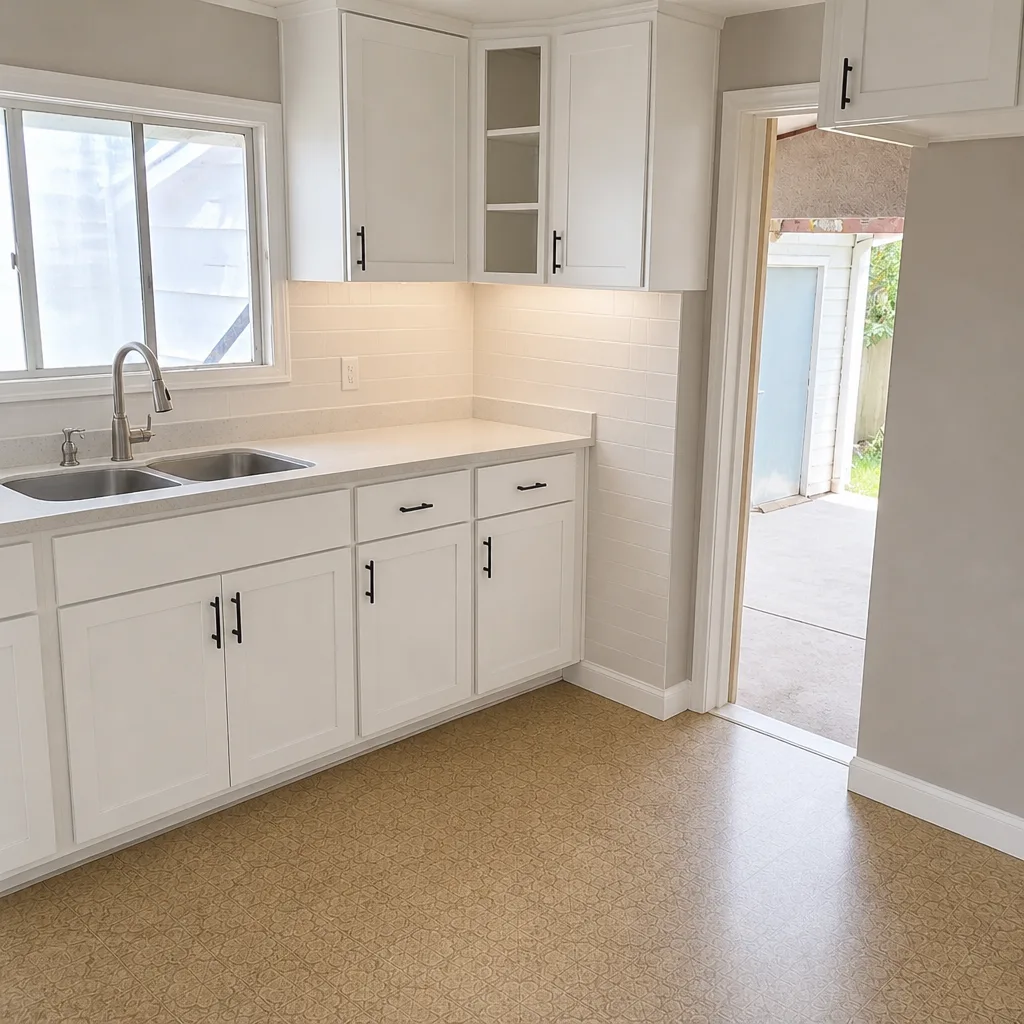
See the difference
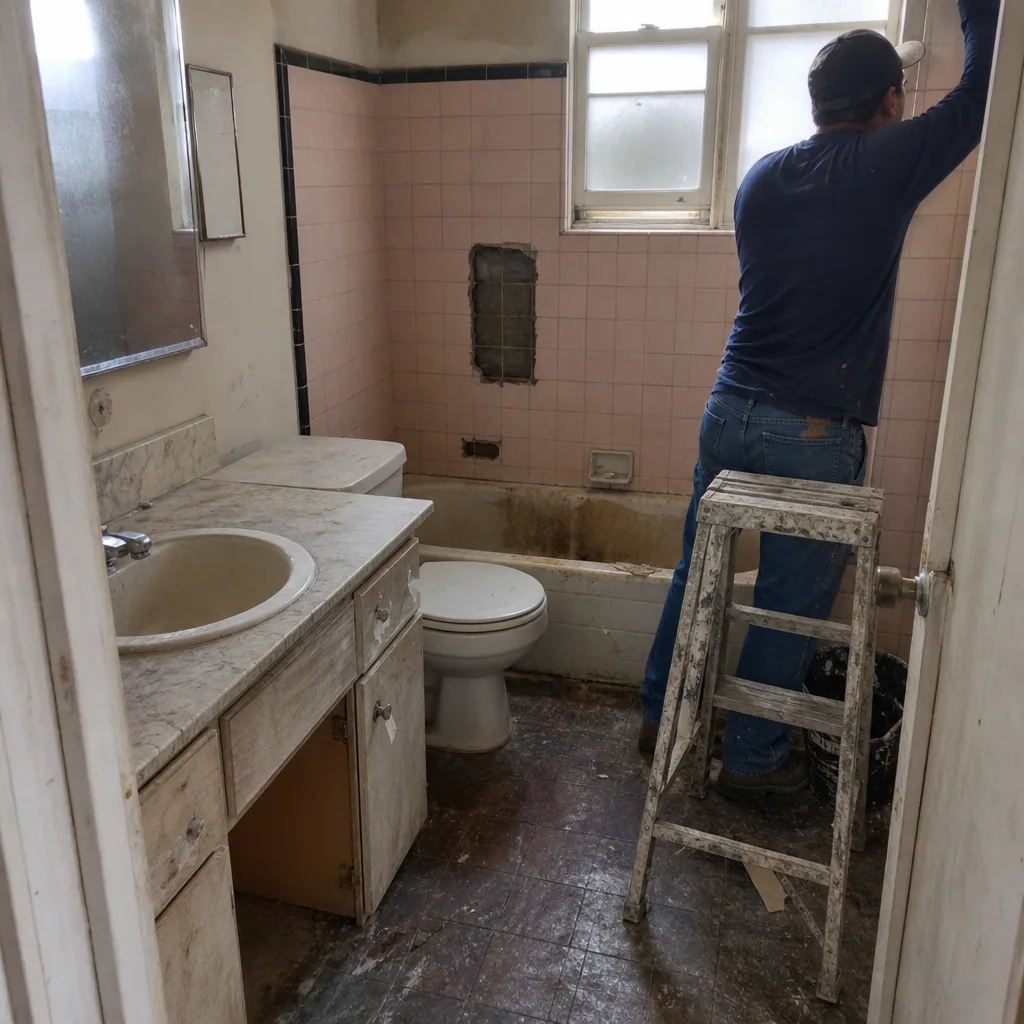 Before
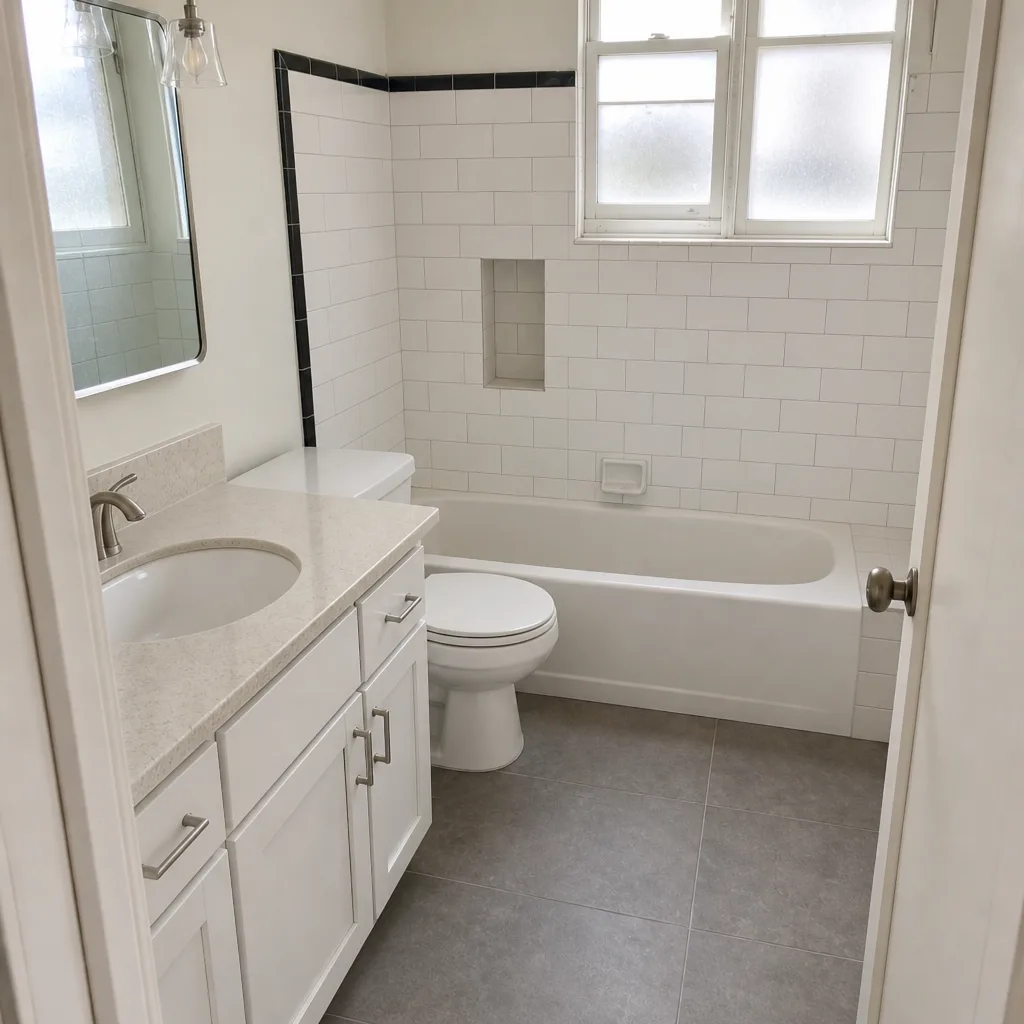 After
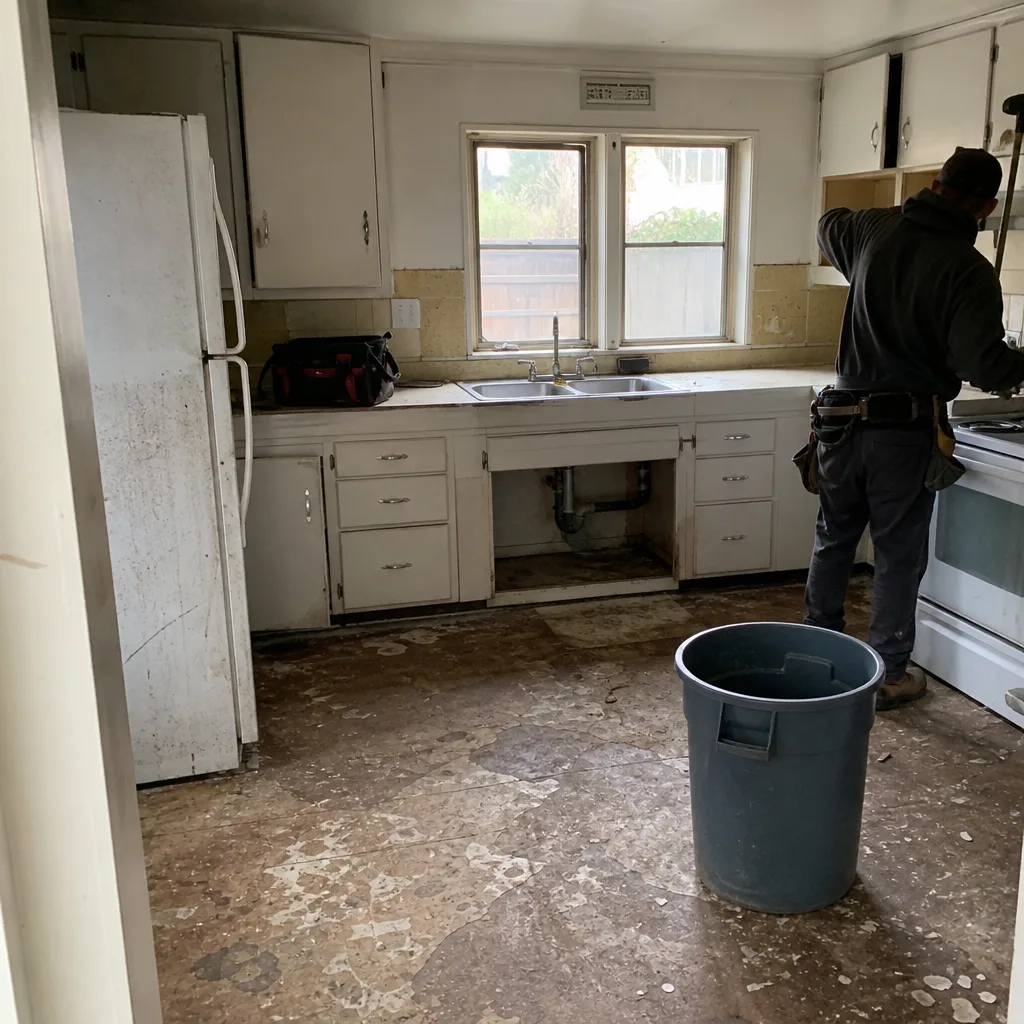 Before
 After
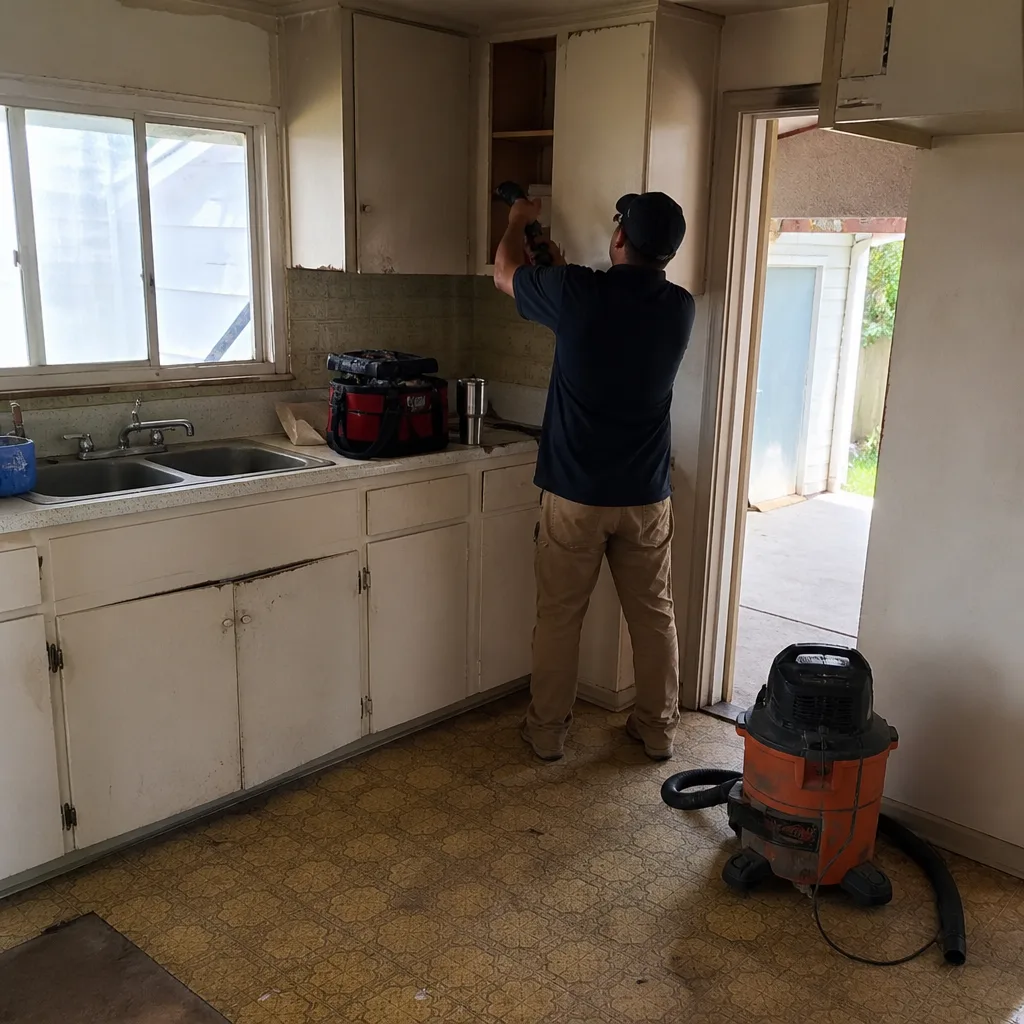 Before
 After
When to Call a Professional
Call a professional immediately when damage involves structural movement, a gas smell, an electrical panel that got wet, a roof that’s missing a substantial area, or water that has reached finished interior surfaces. Call within 24 hours when a foundation crack is widening, a window or door has failed, or a drain line is blocked in a way you can’t clear safely. Call before you start any permanent repair, because the written estimate and the permit matter. In our experience, the calls that go wrong are the ones where a homeowner stabilized the surface and skipped the documentation. Construction Richmond offers free estimates in Richmond – call (877) 367-8617. We answer 24/7. Fast dispatch from 7am to 7pm, Sunday through Friday. The written estimate sets the final price, and there are no change orders added mid-project without your sign-off.
Frequently Asked Questions
Photograph the damage from the ground, tarp the affected area, check the attic for water, and then call a roofing contractor with the photos ready. Do the photos before the tarp – once it’s covered, the adjuster can’t see what happened. Call (877) 367-8617 for a free estimate on the permanent repair.
Ask two questions: for the license number and certificate of insurance, on the spot, and for the business address and how long their technicians have worked in the area. A real contractor produces both without hesitation; a storm-chaser makes excuses. Never pay a large up-front deposit, and always get a written, line-item estimate.
Yes. We can help stabilize and repair roof damage, window and door failures, and water intrusion, and our team coordinates with your insurer where needed. Call (877) 367-8617 – we answer 24/7, with fast dispatch from 7am to 7pm, Sunday through Friday. Estimates are free, and the written estimate sets the final price.
Only if it’s a hairline crack and water is actively entering; hydraulic cement is the tool for that. A crack that’s widening, a wall that has moved, or a door that’s suddenly sticking is a professional assessment, not a patch. Call (877) 367-8617 and describe what you’re seeing.
The City of Richmond building safety hotline for emergency inspections and unsafe-structure reports, the Contra Costa County hazmat line for hazardous material issues, PG&E for gas or electric emergencies, East Bay Municipal Utility District for water issues, and your insurance carrier’s claims line. Save all five in your phone today, plus your utility shutoff locations.
There’s no universal number, but a documented baseline – dated photos, product records, permits, and a written timeline of the emergency – consistently moves a claim faster than an undocumented one. Adjusters can start from facts instead of estimates. Call (877) 367-8617 to get a written estimate that pairs with your documentation.
The Bottom Line
Richmond construction emergencies are won or lost in the first 72 hours, and the preparation happens long before. Build a house file with dated photos and product records. Save the City of Richmond building safety hotline, the Contra Costa County hazmat line, PG&E, EBMUD, and your insurance carrier. Know your water, gas, and electrical shutoffs. Keep tarps, hydraulic cement, sandbags, plywood, and plastic sheeting where you can reach them. Triage by photographing first, stabilizing second, and calling a licensed professional for the permanent repair. Vet that contractor with two questions, and never pay a large deposit before you see a license number and certificate of insurance. One contractor, every project phase, from the driveway to the roofline. Call (877) 367-8617 for a free estimate. We answer 24/7. Fast dispatch from 7am to 7pm, Sunday through Friday.
Written by the team at Construction Richmond.