
Last updated November 17, 2026
 Kitchen remodeling
 Bathroom remodeling
 Home additions & ADU
 Roofing
 Windows & doors
 Driveway & pavers
 Fence
Free written scope consultation - allowances, timeline, and change-order rules on paper before a single trade is scheduled
How to Hire a Construction Contractor in Richmond: A Step-by-Step Guide
Most advice about hiring a contractor tells you to get three bids and check the reviews. That advice assumes the three bids are describing the same job. They rarely are. Low bids are often low because something was quietly left out – the permit, the disposal, the wall prep, the fascia repair under the roofline. A Richmond homeowner who picks the lowest of three numbers without reading what’s missing can face a change order that wipes out the savings before the job is halfway done. This guide teaches you to read a bid the way a contractor reads it, so the estimate you sign is the price you pay. We’ll cover what should be in every bid, how California licensing actually works, why permit responsibility matters at resale, and how to set a payment schedule that protects you without souring the relationship with a good builder.
Quick Answer
Hiring a construction contractor in Richmond means three things: verifying an active California contractor license through the CSLB, getting a written bid that itemizes scope, materials, permits and payment terms, and confirming in writing that the contractor pulls the permit rather than asking you to. Read bid comparisons line by line, not bottom line to bottom line, because the lowest number is usually the least complete scope. Then hold back a final payment until the city inspection clears.
Styles & brands we work with
- Kitchen remodeling
- Bathroom remodeling
- Home additions & ADU
- Roofing
- Windows & doors
- Driveway & pavers
- Fence
Table of Contents
- Why Contractor Bids Don’t Match in Richmond
- The Five Line Items That Quietly Disappear From Bids
- How to Verify a Contractor’s California License
- Who Pulls the Permit – and Why It Matters at Resale
- How to Read a Bid Like a Contractor
- Red Flags Specific to Richmond’s Contractor Market
- Structuring a Payment Schedule That Protects You
- When One Contractor for the Whole Project Makes Sense
Why Contractor Bids Don’t Match in Richmond
Richmond homes are not interchangeable, and that’s the first reason bids diverge. A stucco-and-crawlspace house in the flats, a hillside home with a steep driveway, a mid-century ranch with old single-pane windows – each demands a different approach, and a contractor who hasn’t walked the site will guess. When one bidder inspects the attic and the other writes a number from the curb, you’re not comparing prices. You’re comparing levels of homework.
The second reason is material ambiguity. “Laminate countertops” and “quartz countertops” are different products with wildly different price points, and a vague bid lets the contractor choose the cheaper one later. “Roof replacement” without a shingle line, a tear-off depth, or an underlayment spec is a placeholder, not an estimate. When we prepare a bid, we name the manufacturer and the product line so the customer can compare apples to apples. That’s why we work with more than 50 recognized national brands across roofing, cabinets, countertops, windows, doors, fencing, pavers and plumbing fixtures – so the bid says Cambria, not “premium stone,” and GAF, not “architectural shingles.”
The third reason is scope creep baked in from day one. A bid that excludes demolition debris hauling, protection of existing flooring, or patching drywall after electrical work isn’t dishonest. It’s narrow. The homeowner finds out when the work begins and the extras appear as change orders. In our experience, the biggest source of mid-project friction in Richmond isn’t craftsmanship. It’s the gap between what the homeowner pictured and what the bid actually described.
So when you collect your bids, don’t just ask “how much?” Ask each contractor to define the scope in writing. The one who can is the one who has thought about your house.
The Five Line Items That Quietly Disappear From Bids
Competitive-looking bids get that way by trimming. Here are the five items we most often see missing from Richmond estimates, and the exact question to ask to surface each one.
- Permit fees and the permit itself. A bid that omits the permit isn’t cheaper – it’s incomplete. Ask: “Will you pull the permit in your name, and is the fee included in this number?” If the answer is “you can pull it as the homeowner,” treat that as a major flag, especially on structural work.
- Dumpster, hauling and disposal. Demolition waste has to go somewhere. Ask: “Is the dumpster and all debris removal included, including the final haul-away?”
- Substrate and prep work. Tile over a bad subfloor cracks. Siding over rotted sheathing fails. Ask: “Does this bid include removing and replacing any damaged substrate you find, or is that a change order?”
- Painting and finish touch-ups. A kitchen remodel often ends with patched drywall and a wall color that doesn’t match. Ask: “Is painting of the affected walls and trim in scope?”
- Final cleaning and punch list. A complete bid says who cleans the site, when, and how the punch list gets resolved. Ask: “When the last subcontractor leaves, who does the final walk-through with me?”
The pattern is simple: every omitted line item is a future change order. Bring these five questions to your bid review and the comparison sharpens fast. A contractor who welcomes the questions has nothing hidden. One who gets defensive is telling you something.
How to Verify a Contractor’s California License
Every legitimate contractor doing work over $500 in California must hold an active license from the Contractors State License Board, the CSLB. That’s a real, checkable fact – and it’s the first thing to verify before you sign anything. The check takes minutes on the CSLB website and costs nothing. Do it for every bidder, not just the one you plan to hire.
What you’re looking for:
- Active status. “Expired,” “suspended” or “revoked” means walk away. A license that lapsed for nonpayment of fees is not a legal basis to hire.
- The license class. The letters matter. A B-General Building Contractor license covers the broad spectrum of residential construction and remodeling. An A-General Engineering license suits large infrastructure and certain structural jobs. C-classes are specialty licenses – C-39 for roofing, C-36 for plumbing, C-33 for painting, for example. A single-trade specialist can be the right hire for a single-trade project, but not for a whole-house renovation, a home addition or an ADU.
- The name matches. The name on the license should match the name on the bid, the contract, and the company doing the work. If it doesn’t, ask why before signing.
- Workers’ compensation coverage. The CSLB record shows whether the contractor carries it. If they don’t and they have employees, you can become the one paying medical bills if someone gets hurt on your property.
- Bond. California requires licensed contractors to carry a contractor’s bond, and the CSLB record shows it. Confirm it’s current.
Also check the complaint history. A clean record isn’t a guarantee, but an open unresolved complaint against a bid you’re seriously considering deserves a direct question. A contractor who has addressed problems openly and can explain them is often a better hire than one with a blank slate and no idea how to communicate.
Who Pulls the Permit – and Why It Matters at Resale
A permit is not paperwork. It’s a legal record that the work was inspected and approved by the city. That record lives with the property, and it’s what a future buyer’s inspector and lender will look for. Richmond homeowners who skip permits to save a few hundred dollars often pay for it at sale time, when unpermitted additions, converted garages or finished basements come up as disclosures and the buyer’s agent asks for them.
The difference between “pulls the permit” and “handles the permit” is everything. Here’s what each usually means:
- Pulls the permit: the licensed contractor is the applicant of record, is responsible for scheduling the inspections, and answers to the city inspector on the work. That’s the correct arrangement for any structural, electrical, plumbing or major renovation job.
- Handles the permit: vague. Sometimes it means the contractor files and manages the process. Sometimes it means your name goes on the line as owner-builder to avoid an extra fee – and the contractor walks away with no accountability if the inspection fails.
If you’re planning to build an accessory dwelling unit or add onto your house, this matters even more. Richmond’s ADU rules and setback requirements can be nuanced, and the permit process is where those rules get tested. A contractor who has navigated the city’s review before knows what to expect. A contractor who hasn’t can leave you holding a correction notice. If you’re exploring that route, our home additions & ADU work spans both custom builds and modern prefab units, so the right approach is matched to your timeline and budget rather than forced to one method.
How to Read a Bid Like a Contractor
A contractor’s bid has a structure. Once you know the structure, you can read any of them in five minutes, and you can spot the padded or the thin ones quickly. Here’s the audit we recommend.
- Read the scope description word for word. Every phrase should describe physical work. “Install 200 linear feet of James Hardie siding” is a scope line. “Siding work” is a placeholder.
- Find the material specs. Product brand, model, color, quantity, and where it goes. If a bid says “premium vanity,” ask which manufacturer. If it says “tile,” ask which line and what size. Kitchen and bathroom estimates should name brands – we draw from Cambria, Caesarstone and Silestone for countertops and KraftMaid and Wellborn for cabinetry, and that specificity is the difference between a bid you can trust and a bid you’ll be renegotiating.
- Check the exclusions. A legitimate contractor tells you what’s NOT included. The good ones want you to compare honestly. Hidden exclusions are the reverse.
- Look for the payment schedule. No schedule, or a front-loaded one asking for half down before work begins, is a red flag. More on that below.
- Confirm the change-order process in writing. What happens when a hidden condition turns up? Do change orders require your written approval before work proceeds? They should.
- Verify the warranty. What’s covered, for how long, by whom – the installer or the manufacturer – and in writing. Roofing warranties, for example, vary by manufacturer and product tier; there’s no single warranty spec for the trade.
- Read the schedule. Start date, phases, estimated end date. Not a promise to “start soon,” but a sequenced plan.
If a bid passes those seven checks, it’s a real bid. If it fails two or three, it’s not cheaper – it’s incomplete, and the gap between the number and the finished price is exactly what you’ll pay for later.
Red Flags Specific to Richmond’s Contractor Market
Every market has its patterns. Around Richmond, these are the ones worth watching:
- Vague material specs on a premium-scope bid. A contractor who bids a full kitchen remodel without naming a cabinet line or countertop brand has left the door open for downgrade. Ask which brand, and hold them to it in writing.
- No written lien-waiver process. In California, subcontractors and suppliers can file mechanic’s liens against your property if they aren’t paid – even if you paid the general contractor. A legitimate contractor will provide conditional and unconditional lien waivers at each payment milestone, and include subcontractor payment terms in the contract. If they can’t explain how they handle this, you’re exposed.
- Pressure to skip the City inspection. “It’s just a small addition, we don’t need a permit” is a yellow flag. On any permitted scope, that’s a hard no. Inspections are the one piece of third-party quality control you actually get as a homeowner.
- Cash-only or checks-to-a-different-name. Payment to the individual, not the licensed entity, severs you from the protections the license offers. Pay the contracting company, by a method you can document.
- An empty job site that stays empty. A slow start on a demo is normal. A two-week absence is a conversation. If the crew disappears for a paragraph in the schedule, ask why in writing.
- Subcontractors you’ve never met. If the crew changes every week with no consistent supervision, quality drifts. A single-source contractor keeps the trades coordinated, which is why the same project scope is easier to hold together under one point of contact.
The common thread is information asymmetry. A contractor who’s explaining what they’re doing, in writing, is a partner. One who’s doing things you don’t understand is a risk, no matter how friendly the conversation goes.
Structuring a Payment Schedule That Protects You
California limits the deposit a contractor can require on most home improvement contracts, and it’s worth asking every bidder what deposit they propose. A well-structured schedule pays for work already done, not work you’re hoping will get done. Here’s a structure that works both ways:
- Deposit at contract signing: covers initial materials and mobilization only. Ask each contractor to justify the number against actual upfront material costs.
- Milestone payments: tied to completed phases – demolition complete, framing inspected, rough systems in, drywall hung, cabinets installed, project substantially complete. Each milestone has a defined “done” state.
- Final payment after the punch list: hold back a meaningful portion until the final walk-through is signed off, the punch list is closed, and the city inspection has cleared. This is standard, not adversarial. A legitimate contractor plans for it.
- Change orders paid as they’re approved: separate from the base schedule, in writing, with the homeowner’s signature before work proceeds.
The key principle: no payment ever outruns the work. A contractor who asks for 50% before demo hasn’t shown you anything yet. One who asks for progress payments backed by inspections and written milestones is telling you their finance process is a real business process, not a hope.
When One Contractor for the Whole Project Makes Sense
Coordinating a multi-trade renovation is a job in itself. Siding waits on framing. Flooring waits on cabinets. The window order has to clear before the drywall closes. If you hire the trades separately, every phase transition is your call to make, and any delay on one trade ripples into every other. That’s the hidden cost of a “lowest bid per trade” approach: the sum of individually low numbers is not low when you’re managing the schedule.
For whole-house scope, a single-source contractor reduces that burden. A roof, a window package, a fence, a driveway, a kitchen and a bathroom under one agreement means one schedule, one point of responsibility, and one line of communication. Around Richmond, that matters most on properties where the exterior and the interior are in play at the same time – say, a home that needs new siding, new windows and a new fence before the kitchen even starts. Every subcontractor transition is a chance for something to slip, and a contractor who plans across categories can sequence it. If your scope is exterior, we handle roofing and windows and doors as a package so the envelope closes properly. If it’s hardscape, driveway & pavers and a matching fence line can be planned together for a consistent look from the curb, using lines from Belgard, Unilock or Techo-Bloc rather than commodity concrete. Barrier fencing from Barrette or Master Halco, installed to complement the house, is different work than a stack of panels from a warehouse.
That’s the single-source argument in a sentence: fewer seams, fewer handoffs, one person accountable for the schedule. It’s not always the cheapest way. It’s usually the smoother one.
Common Mistakes to Avoid
- Choosing the lowest bid without comparing scope. If one bid is dramatically lower than the other two, it’s almost always missing something. Read the details before you call the number “better.”
- Skipping the CSLB check because the contractor seemed professional. Good communication and a current license are separate things. A five-minute check is the cheapest insurance you’ll buy on the project.
- Letting the contractor put the permit in your name to save a fee. The permit is the record buyers look for. Owner-builder permits on work you didn’t do yourself create problems at resale.
- Paying too much, too early. A deposit that covers materials is normal. A deposit that funds the contractor’s whole first half of the project is you taking on their cash-flow risk.
- Accepting a bid that doesn’t name the material. “Premium” and “high-quality” are not specifications. Brand names are, and they’re your leverage when something goes wrong later.
- Not asking about lien waivers. A general contractor who won’t provide them at payment milestones leaves you exposed to subcontractor claims on your property even when you’ve paid in full.
- Making verbal change orders. Every change should be in writing, priced, signed and dated before work proceeds. Verbal “we’ll figure it out later” is how a project budget doubles.
See the difference
 Before
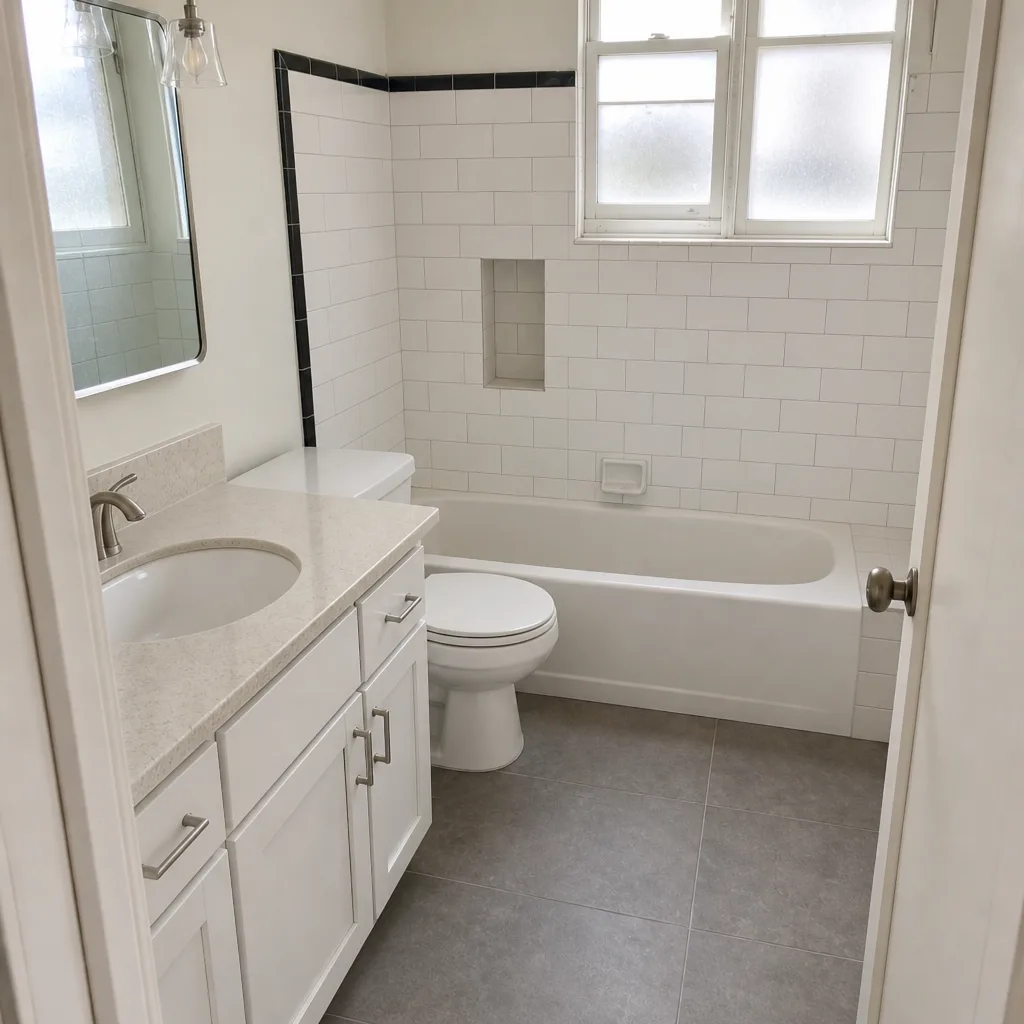 After
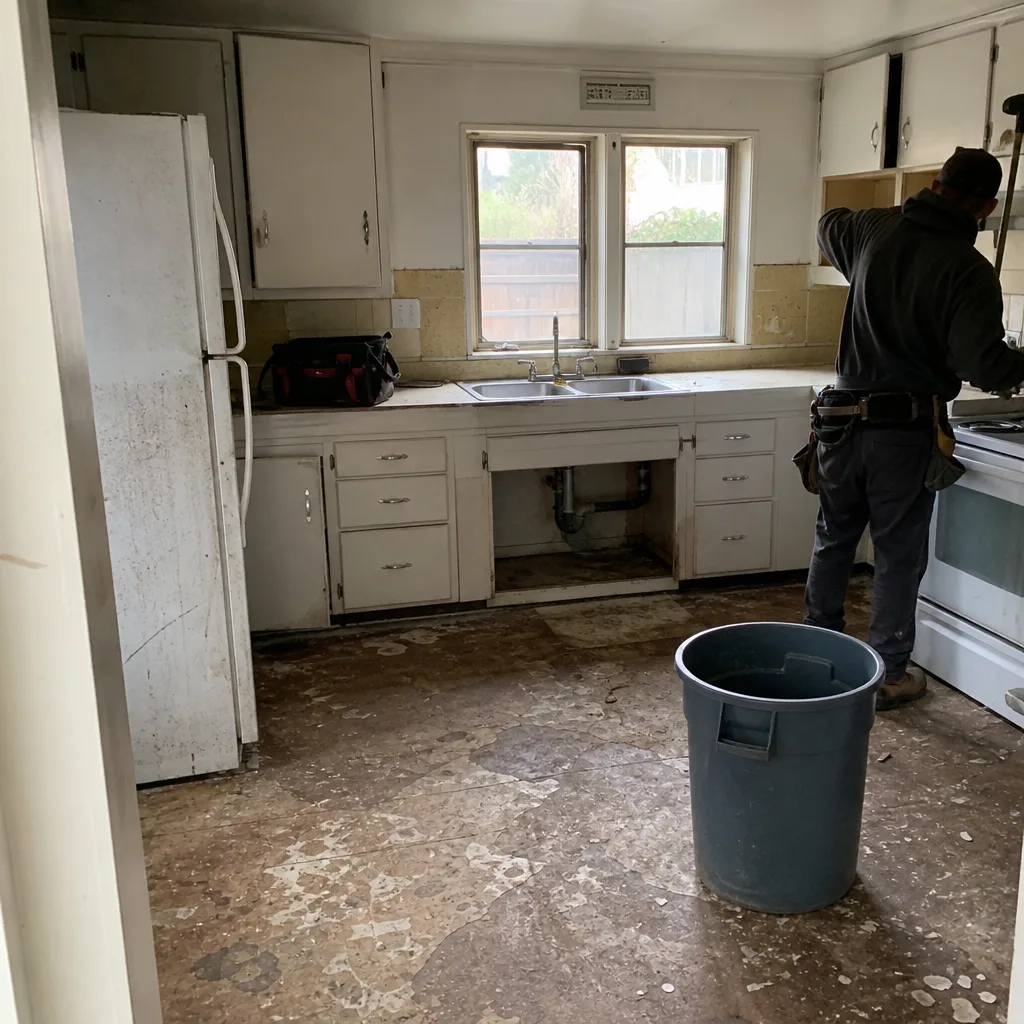 Before
 After
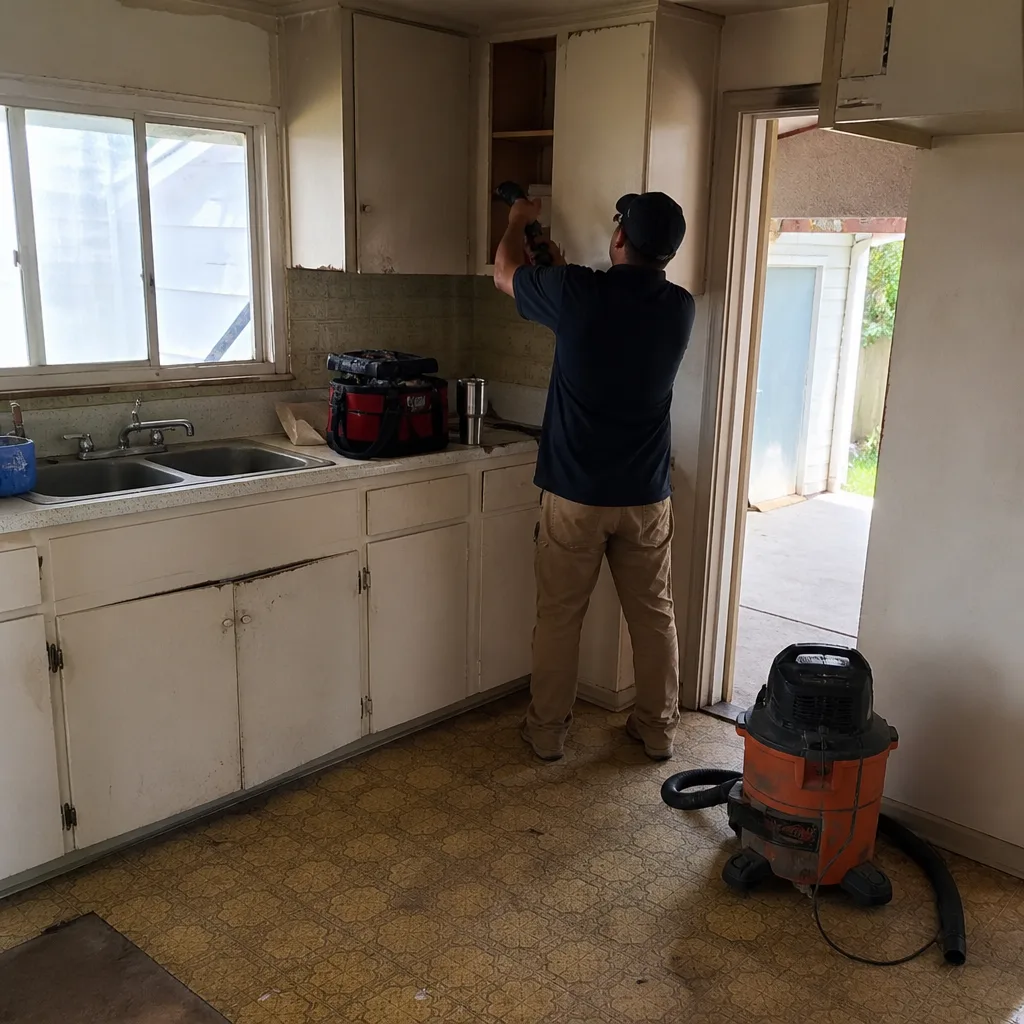 Before
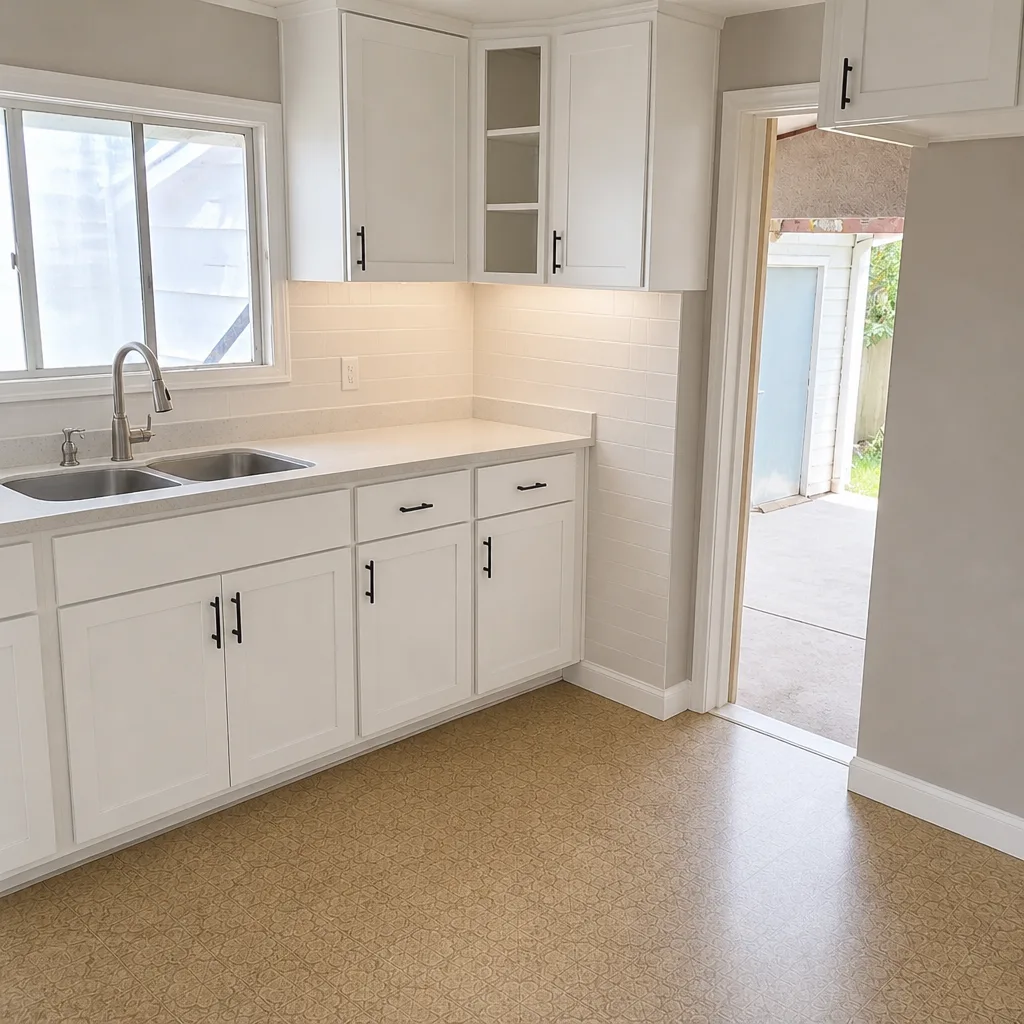 After
When to Call a Professional
Some work is genuinely doable as a homeowner project. Swapping a faucet, painting a room, hanging a shelf – those aren’t a contractor’s job. But several categories belong to a licensed professional, and it’s worth knowing which ones before you start: any structural change, including removing a load-bearing wall or adding a room; any electrical work beyond a light fixture or outlet swap; any plumbing work behind a wall; any roof work above a single-story walkable pitch; any addition, ADU or major exterior envelope work like a full siding or window replacement; and any interior renovation where three or more trades will touch the same room. These are the jobs where an error doesn’t show up for a season or two, and the correction costs multiples of the original savings.
If you’re in that territory in Richmond, our team can walk you through scope before you commit. Construction Richmond offers free estimates in Richmond – call (877) 367-8617. We answer 24/7. Fast dispatch from 7am to 7pm, Sunday through Friday.
Frequently Asked Questions
Look up the contractor’s license number on the Contractors State License Board website before signing anything. An active B-General Building Contractor license covers most residential remodeling and additions; A-classes apply to large structural work; C-classes are single-trade specialties. Confirm the name on the license matches the name on the bid and the contract. A closed or expired license means you should not hire, no matter how good the references sound.
A complete bid includes labor, materials with brand and product specs, permit fees and permit pulling, debris removal, substrate prep, a payment schedule, a change-order process, and a written warranty. Bids that skip the permit, the disposal or the material specs are not lower in total – they just look lower now. Ask each bidder to itemize the same categories, then compare. Call (877) 367-8617 for a free estimate on your scope.
Only if it’s a written change order that you approved before work proceeded. A legitimate bid sets the price for the defined scope, and any change – a hidden water-damaged wall, a design swap, added square footage – is priced and signed first. Change orders are normal on renovation work; surprise ones are not. The written estimate you sign is the one that sets the number, so compare what’s written, not what’s said.
Yes. On permitted scope we pull the permit in our name as the licensed contractor of record, schedule the inspections with the City, and stay on record through final approval. This is one of the reasons we recommend against owner-builder permits for work a contractor is doing: the permit record lives with your property and comes up when you sell. Ask any bidder in Richmond how they handle permit responsibility before you sign.
It depends on scope. A bathroom remodel typically runs several weeks once demo begins; a kitchen runs longer because of cabinet lead times and rough-in inspections; an addition or ADU runs months, and the prefab route can compress the build timeline compared to full site construction. What matters more than a single estimate is a sequenced schedule broken into phases with clear dependencies. Ask every bidder to give you one in writing.
Because the bids often aren’t describing the same job. One includes permits and disposal and names the material brands; another omits all three to look competitive. Labor rates in Richmond also vary with crew structure and subcontractor overhead. Compare scope line by line, material spec by material spec, and permit responsibility by permit responsibility – the totals that look 20% apart often converge or flip once the missing items are added back in.
The Bottom Line
Hiring a contractor in Richmond is a reading skill before it’s a buying decision. Verify the CSLB license first, then compare bids line item to line item, not number to number. Get permit responsibility in writing, hold final payment until the punch list closes and the city inspection clears, and demand material brands instead of adjectives. The contractor who welcomes every one of those questions is the one who has nothing to hide. The one who doesn’t is telling you something useful before the work begins. If you’re ready to start, we’re ready to walk your scope. Call (877) 367-8617 for a free estimate.
Written by the team at Construction Richmond.